

10 Best Cryptocurrency Exchanges in Nigeria in 2026
Choosing a cryptocurrency exchange in Nigeria right now isn’t as simple as downloading an app and getting started. Between CBN banking restrictions, Binance’s suspended Naira services, rising scam cases on P2P platforms, and hidden fees embedded into exchange rates, the wrong choice can cost you real money and time.
This guide is built differently. Instead of using a stale global list, we’ve looked at how Nigerians actually use crypto in 2026, whether it’s freelancers cashing out USDT, traders flipping altcoins, or everyday users just trying to convert Bitcoin to Naira without stress. We’ve reviewed the top platforms across all categories and ranked them based on what truly matters, such as; Naira support, speed, security, fees, and reliability.
Quick answer? If you want fast and stress-free Naira payouts, go with an OTC platform like Dtunes. If you want to trade actively, exchanges like Quidax or Bybit make more sense. And if you’re chasing the best rates, P2P platforms like Binance still exist, but with a little risk.
Quick Answer: Best Cryptocurrency Exchanges in Nigeria by Category
- Best OTC / Instant Cash-Out (Dtunes): automatic conversion, no P2P risk, 5–10 minutes payouts, cashback on trades and lots more.
- Best for Beginners (Quidax): SEC licensed, Nigerian-built, easy to use.
- Best P2P for Naira (Binance P2P): deepest naira liquidity (but note that the app works but the website is blocked).
- Best Established Exchange (Luno): operating since 2014 with strong security history.
- Best for Advanced Trading (Bybit): futures, copy trading, deep global liquidity
- Best Nigerian Local App (Busha): SEC licensed, mobile-first experience, and a good local team.
The 3 Types of Crypto Exchanges in Nigeria (Which One Do You Need?)
- OTC / Instant Conversion Platforms
- P2P (Peer-to-Peer) Platforms
- Full Crypto Exchanges (Order Book Platforms)
Before picking a platform, you need to understand something most articles skip: not all “crypto exchanges” work the same way. Let’s quickly see the types, or let’s say categories of crypto exchanges that we have. They include:
1. OTC / Instant Conversion Platforms
This is the simplest way to use crypto in Nigeria today.
You send your crypto → the platform converts it automatically → Naira lands in your bank account.
There’s no buyer, no negotiation, no waiting around. The platform itself handles the transaction.
This is what most Nigerians use daily, especially freelancers, remote workers, and traders cashing out profits. The biggest advantage here is safety. Since you’re not dealing with another person, you avoid common P2P issues like fake payment alerts or chargebacks. You also get your money faster usually within minutes after confirmation.
The only disadvantage of this category of exchange is that you don’t set the price yourself. You accept the platform’s rate. On good platforms, it is transparent and close to the market.
Examples: Dtunes, Breet, Monica and the likes.
2. P2P (Peer-to-Peer) Platforms
This is where things get more hands-on. Here, you’re not selling to the platform, you’re selling to another person. The platform only acts as an escrow. You can sometimes get slightly better rates here, especially when demand is high. That’s why experienced traders still use it. But it comes with risks such as fake alerts, delayed payments, chargebacks, and even receiving money from flagged accounts. These are common issues Nigerian users deal with on P2P.
It’s also time-consuming. You might spend 30 minutes to 2 hours completing a single transaction. Examples: Binance P2P, Bybit P2P, Noones, Remitano
3. Full Crypto Exchanges (Order Book Platforms)
This is what people traditionally think of as a “crypto exchange.”
You place buy or sell orders, set your price, and wait for the market to match it. You get full control, but it’s slower and more complex. Withdrawals to Naira can take hours (in fact, it takes days in rare cases), and beginners often find the interface confusing at first. This category is best for people who are actively trading or holding crypto long-term.
Examples: Luno, Quidax, KuCoin, Bybit.
QUICK ONE: If you just want to convert crypto to Naira quickly, go OTC. If you want to trade, use a full exchange. If you want to squeeze out the best rate and don’t mind risk, use P2P.
Our Ranking Methodology
We didn’t just throw together a list based on popularity. Each platform here was evaluated using criteria that actually matter to Nigerian users.
1. Naira Integration & Payout Speed (25%)
How easily can you convert crypto to Naira? Does it go straight to your bank? How long does it take?
2. Security & Track Record (25%)
Has the platform been hacked before? Do they use proper security systems like cold storage, BVN/KYC processes, user fund protection and 2FA?
3. Regulatory Compliance (15%)
Is the platform recognised or licensed by the SEC in Nigeria? Are they operating within legal boundaries?
4. Fees & Rate Transparency (15%)
Not just visible fees, we looked at hidden costs like rate spreads too.
5. User Experience for Nigerians (10%)
Is the app easy to use on mobile? Does it work well on Nigerian networks? Is customer support responsive? We also consider language and context for Nigerian users?
6. Reliability (10%)
Does the platform actually deliver payouts consistently? Or do users complain?
Data sourced from platform websites, Play Store and App Store reviews, Nigerian crypto community feedback, and direct platform testing as of Q1 2026.
10 Best Cryptocurrency Exchanges in Nigeria (2026)
1. Dtunes (Best for Instant Crypto-to-Naira Conversion)
Type: OTC/Automatic | Fees: Transparent | Speed: 5–10 minutes | Naira: Direct bank transfer
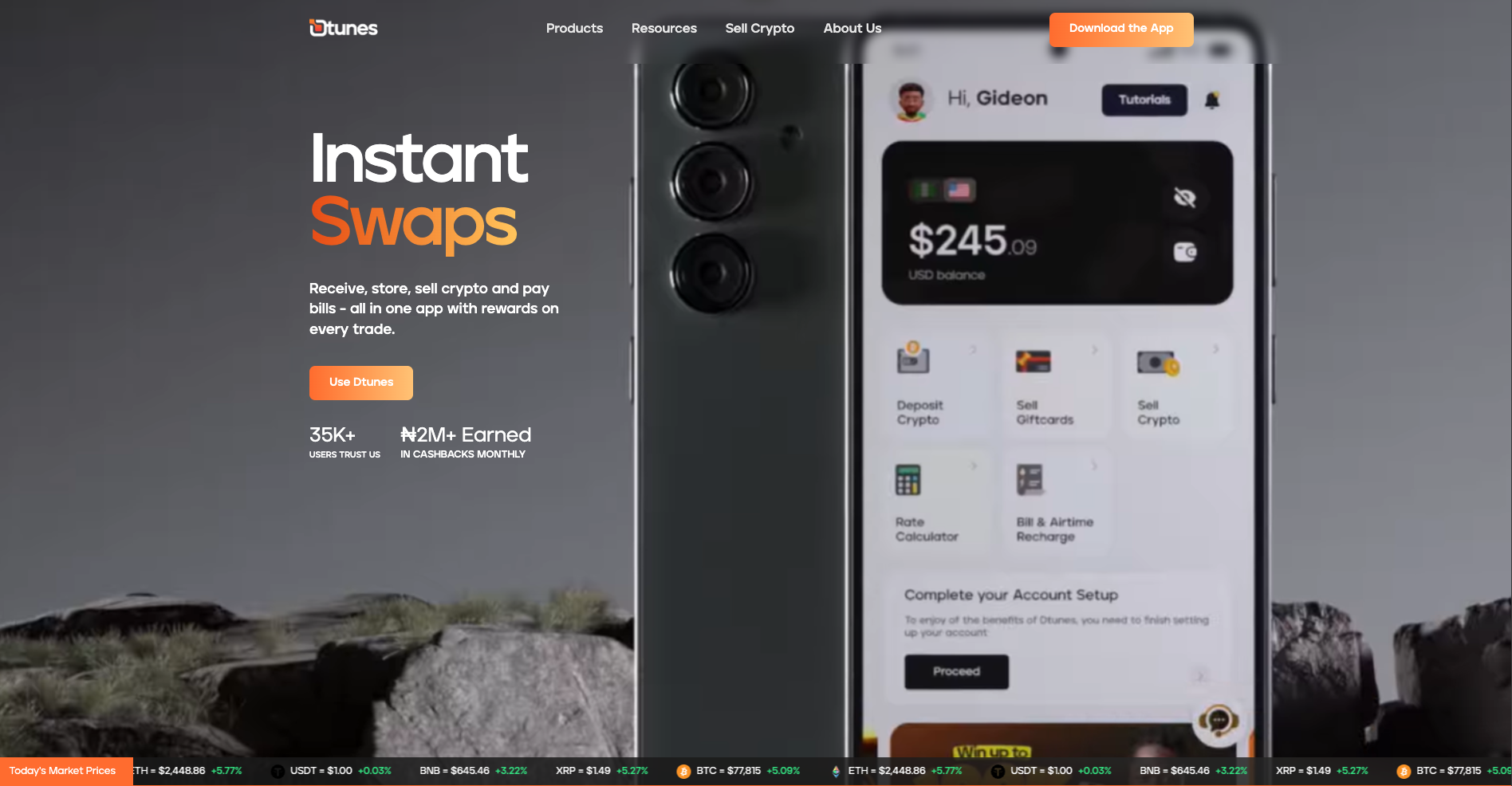
If Dtunes is built for something, it has to be the turning of your crypto into Naira without stress.
You send your crypto (BTC, USDT, ETH, SOL, and others), and the platform automatically converts it and pays your bank account. You don’t have to wait for buyers. No P2P negotiation. No “I’ve sent the money, check your bank” drama. It’s that straightforward.
What stands out is how fast everything is. Once your crypto confirms on the blockchain, your Naira shows up within 5 to 10 minutes. That’s a big deal in a space where delays are common.
Following this guide to sell your crypto on Dtunes in 3 simple steps.
Dtunes doesn’t just offer crypto trades. You can pay bills, buy airtime, and even top up data directly with your crypto. That makes it more practical and fun for everyday use.
Moreover, rates are shown before you confirm, so you’re not guessing what you’ll receive. And for new users, you can start without full KYC until they cross the ₦500,000 transaction threshold, which removes friction for first-time traders.
Pros
- Automatic conversion — no P2P risk
- Very fast payouts (5–10 minutes)
- Transparent rates
- Supports multiple cryptocurrencies
- Airtime, data, and bill payments
- Cashback and referral rewards
- 24/7 human support
Cons
- Sell-only (you can’t buy crypto)
- You don’t control pricing
Best for: Anyone who wants fast, stress-free crypto-to-Naira conversion.
If you just want to convert crypto to Naira quickly and safely, an OTC platform is almost always your best choice. If you want to actively trade, a full exchange is right for you.
Get Started2. Binance (Best P2P Marketplace for Naira)
Type: P2P + Full Exchange | Fees: 0.1% spot, 0% P2P | Speed: 15 min–2 hrs (P2P) | Naira: P2P only | SEC Nigeria: No
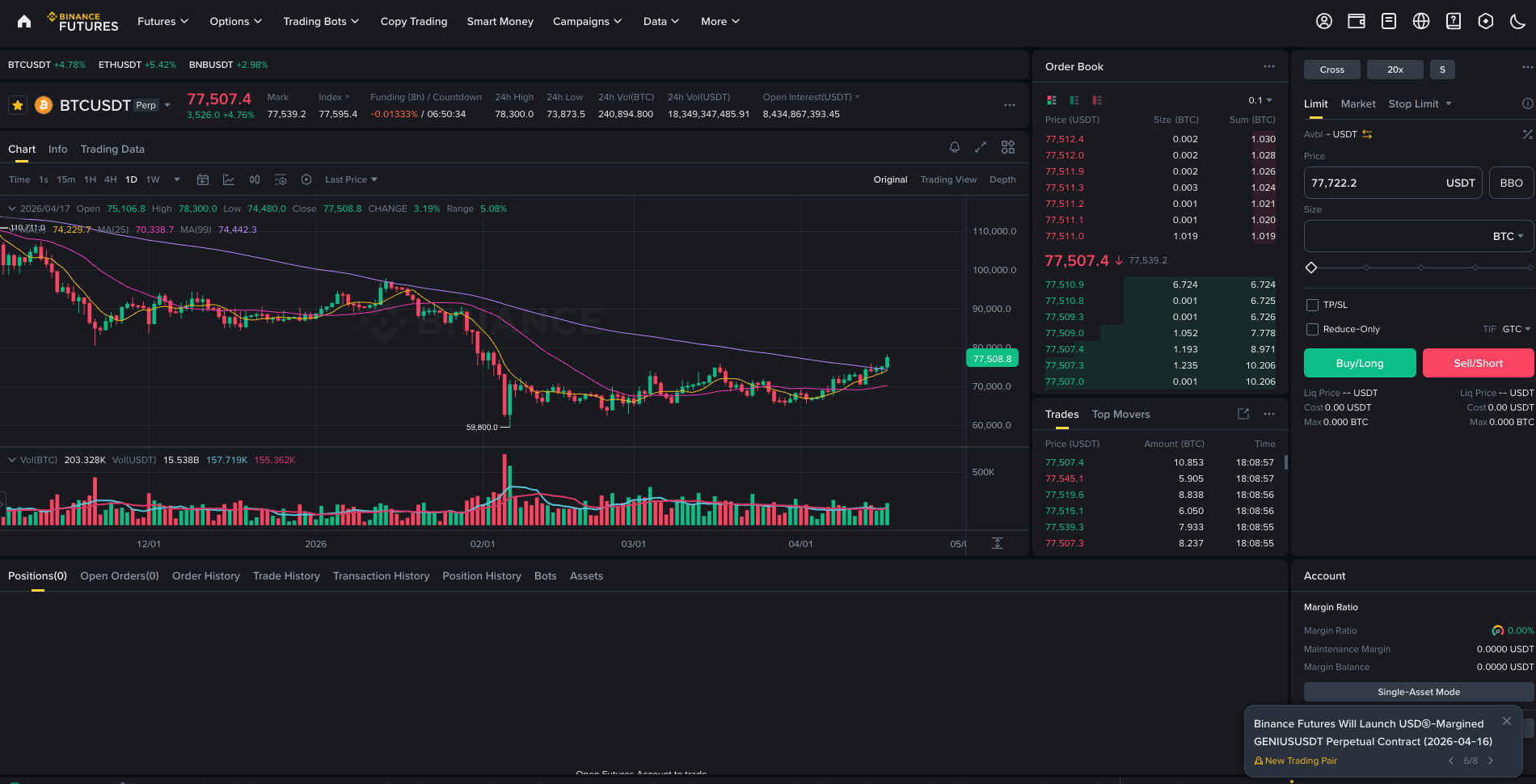
Binance is still widely used in Nigeria, but not in the same way it used to be. Since 2024, Naira services have been suspended, and the website is blocked by local ISPs. But the mobile app still works, and the P2P marketplace remains active.
It’s still the deepest P2P market in Nigeria, meaning you’ll find more buyers and sellers here than anywhere else.
That said, the risks haven’t changed. P2P still requires caution, especially with unknown buyers.
Pros
- Largest P2P liquidity
- Low trading fees
- Wide range of cryptocurrencies (up to 400+)
- Advanced trading tools (including TradingView, futures, copy trading)
Cons
- No direct Naira deposits or withdrawals
- Website blocked
- Ongoing regulatory issues
- P2P scam risks
Best for: Experienced users who have a good understanding of P2P trading.
3. Quidax (Best Regulated Nigerian Exchange)
Type: Full Exchange | Fees: 0.2–0.5% | Speed: 1–3 hrs withdrawal | Naira: Bank transfer | SEC Nigeria: Yes (licensed)
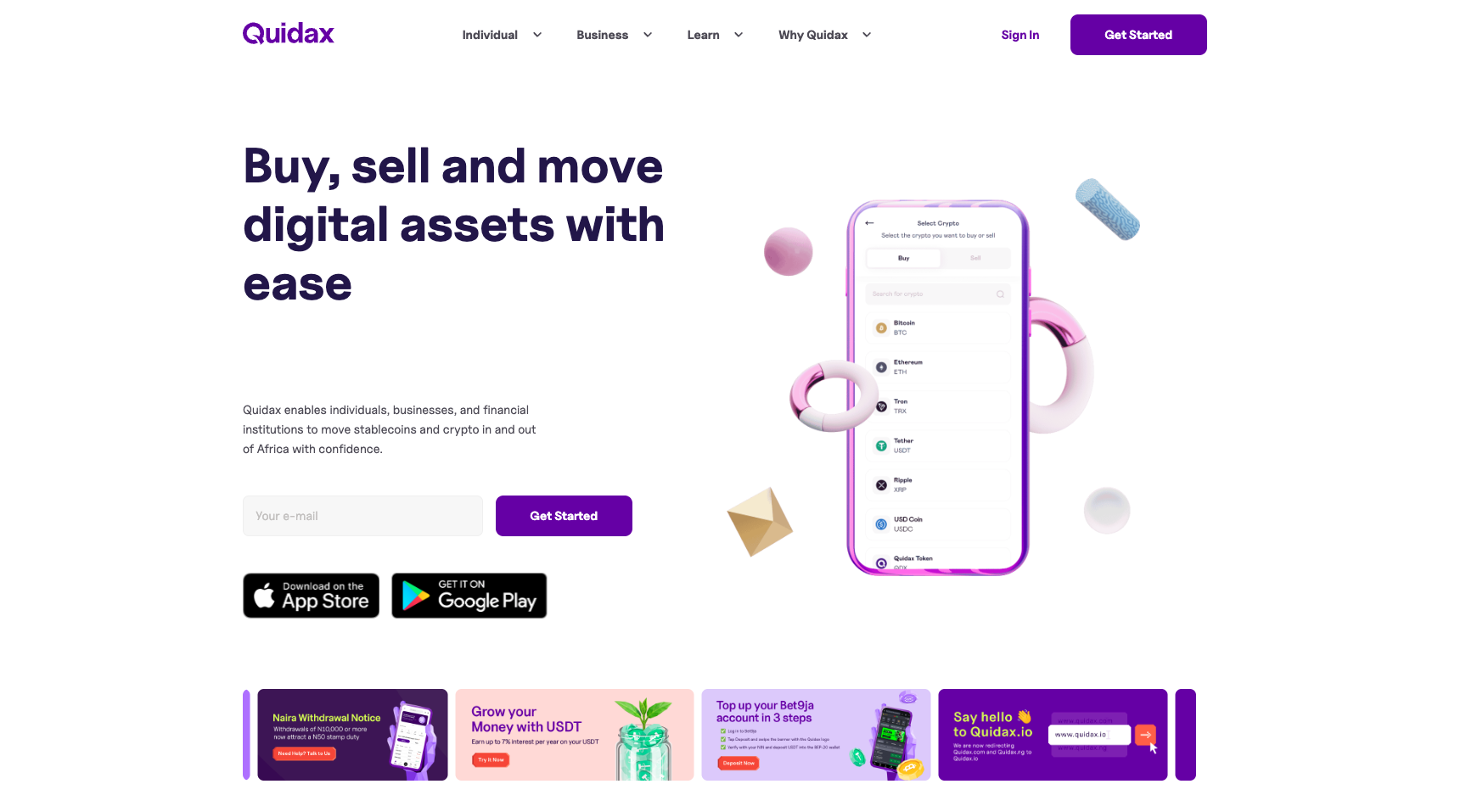
Quidax stands out mainly because it’s SEC licensed. This is something not many platforms can claim. It is built with Nigerian users in mind, so things like bank transfers and Naira withdrawals feel more straightforward.
The interface is clean and intuitive enough for beginners, but still functional for regular traders.
Pros
- SEC licensed
- Nigerian-focused platform
- Bank transfer deposits and Naira withdrawals
- Easy to use
- Local support
Cons
- Slower withdrawals than OTC
- Limited coins compared to global exchanges
- Fees higher than some international platforms
Best for: Nigerian beginners, those prioritising regulatory compliance, medium-volume traders.
4. Luno (Best for Security and Longevity)
Type: Type: Full Exchange | Fees: 0.1% maker/taker | Speed: 1–3 hrs | Naira: Bank transfer + voucher | SEC Nigeria: No (FSCA-regulated)
Operating in Nigeria since 2014 with no major security incidents, Luno is the most trusted exchange for risk-averse Nigerian users. Its interface is deliberately simple, designed to make buying Bitcoin feel like a banking app. Supports bank transfer deposits, Luno vouchers at retail locations, and has a long track record of reliable payouts.
Pros
- Longest track record of operation in Nigeria (since 2014)
- No history of major hacks or security incidents
- Simple and intuitive interface
- Bank transfer and voucher deposit
- Cold storage via BitGo and Fireblocks
Cons
- Limited assets (BTC, ETH, major coins)
- Relatively slower withdrawals when compared to OTC platforms
- Instant buy/sell feature carries higher fees (~1.5–2%)
Best for: Conservative investors, beginners, long-term holders who prioritise security above all.
5. Bybit (Best for Advanced Traders)
Type: Type: Full Exchange + P2P | Fees: 0.1% spot, 0.02%/0.06% futures | Speed: Variable | Naira: P2P only | SEC Nigeria: No
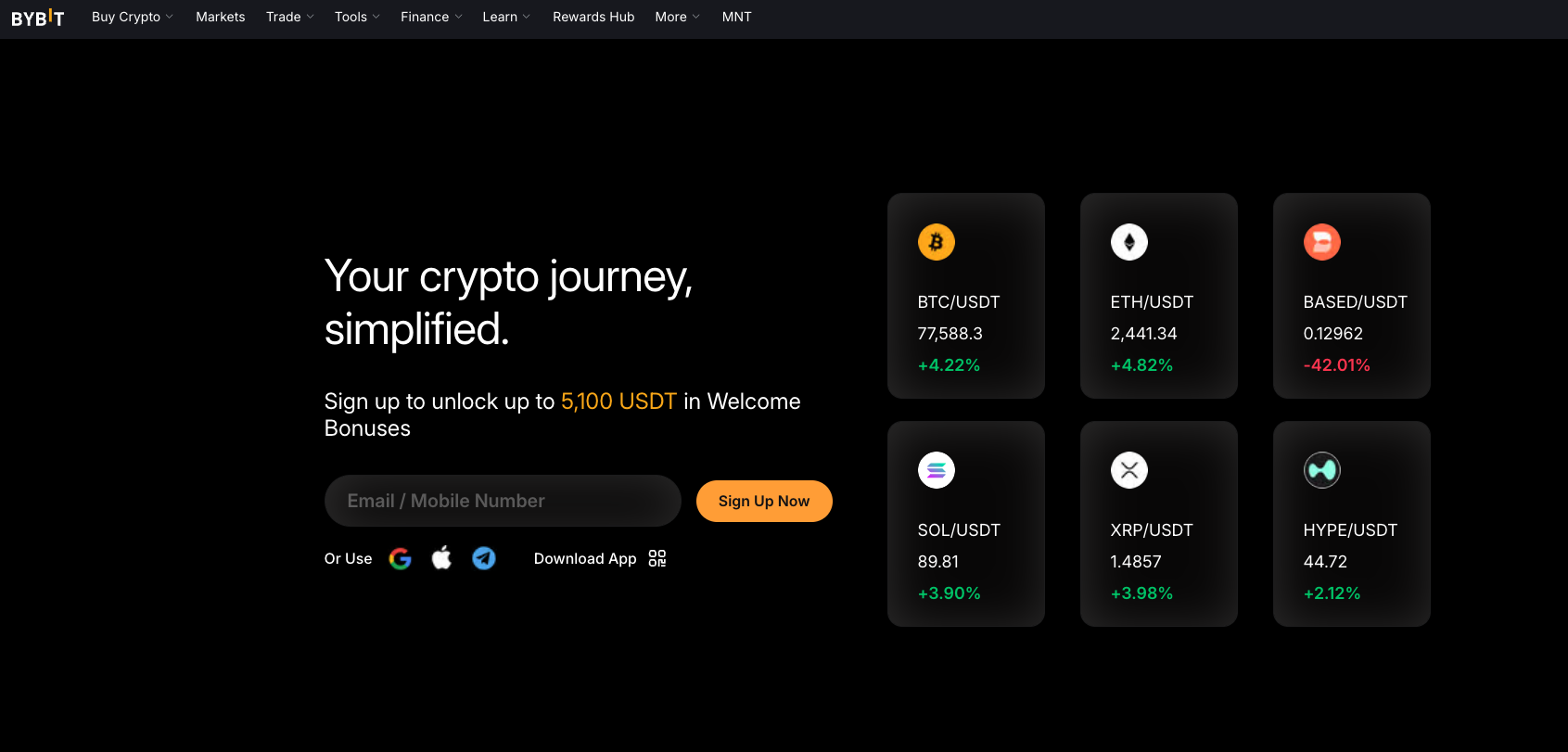
Bybit has rapidly become one of the main alternatives to Binance. Its P2P marketplace is gaining Naira liquidity, though still smaller than Binance’s. Supports futures trading with up to 100x leverage, copy trading, TradingView integration, and a growing Nigerian P2P buyer pool.
Pros
- Advanced futures and derivatives trading
- Competitive fees
- Copy trading for passive strategies
- No Binance-style Nigerian regulatory controversy
- Growing Naira P2P market
Cons
- No direct Naira deposit/withdrawal
- Complex for beginners
- P2P scam risks still apply
Best for: Experienced traders who want a Binance P2P alternative with advanced trading features.
6. Busha (Best SEC-Licensed Local App)
Type: Type: Full Exchange | Fees: Variable | Speed: Fast | Naira: Bank transfer | SEC Nigeria: Yes (licensed)
Busha is a homegrown Nigerian exchange with SEC licensing and a mobile-first design built specifically for Nigerian users. Simple interface, local team, educational resources, and savings products. Smaller asset selection and lower liquidity than global platforms, but strong on regulation and local user experience.
Pros
- SEC licensed
- Truly Nigerian-built product
- Clean mobile design with appealing UX
- Educational content for beginners
- Savings products with yield
Cons
- Smaller coin selection
- Lower liquidity
- Not really suitable for advanced traders
Best for: Nigerian beginners wanting a fully local, regulated exchange with a familiar user experience.
7. Yellow Card (Best for Pan-African Users)
Type: Type: Exchange | Speed: Fast | Naira: Bank transfer | SEC Nigeria: Multi-country licensed
Yellow Card operates across 20+ African countries including Nigeria. Simple buy/sell interface focused on accessibility. Good for users who want a straightforward platform with African-market experience and fast bank transfer processing.
Pros
- Works across Africa
- Growing merchant network
- Easy to use
- Fast transactions
Cons
- Limited advanced features
- Smaller crypto selection
Best for: Beginners and pan-African users, who want a simple platform with African-market expertise.
8. Roqqu (Best for Coin Variety Locally)
Type: Type: Exchange | Naira: Bank transfer | SEC Nigeria: No
Roqqu is a Nigerian-focused platform with over 100 cryptocurrencies, making it one of the widest local selections available. Optimised for Nigerian mobile networks and local payment methods. They are growing their user-base and still building a security track record compared to other established platforms.
Pros
- Wide coin selection (over 100+)
- Built for Nigerian networks and mobile
- Competitive trading fees
Cons
- Not SEC licensed
- Less established
Best for: Nigerian traders wanting broad crypto access on a local platform.
9. Breet (Best OTC Alternative)
Type: OTC/Automatic | Speed: 5–30 min | Naira: Direct bank | SEC Nigeria: No
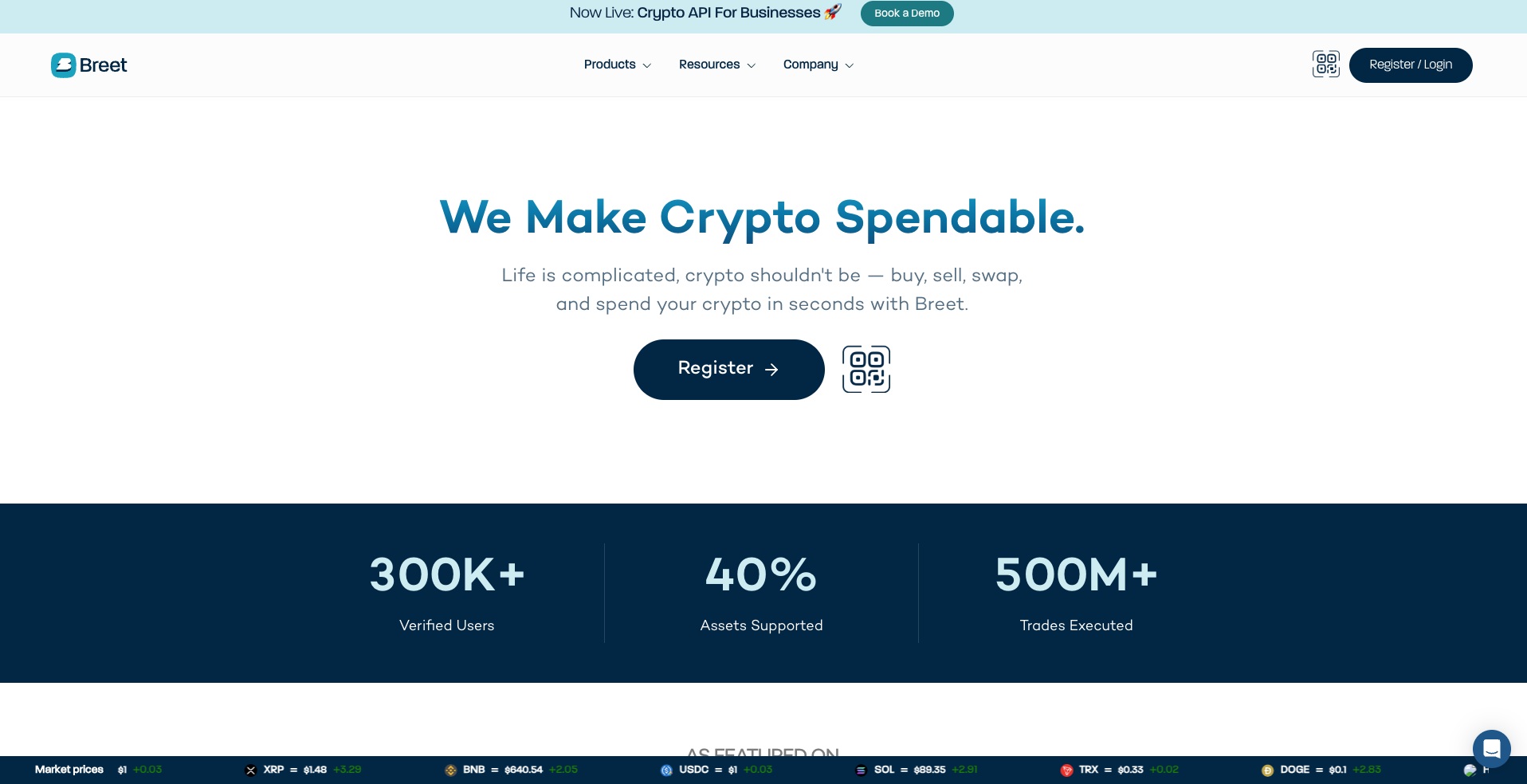
Breet operates similarly to Dtunes with interesting features, such as automatic conversion, zero P2P risk, and bank direct payout. Fees for Breet are built into the exchange rates (approximately 1–2%) rather than a transparent flat or percentage fee. It has a solid reputation, clean app, and over 250,000+ users. Good as a backup rate-comparison platform.
Pros
- Automatic conversion (no P2P risk)
- Fast payouts (5–30 minutes)
- Clean, user-friendly app
Cons
- Fees less transparent (built into rate)
- Sell-only (cannot buy crypto)
- Not SEC licensed
Best for: Anyone wanting a second OTC option for rate comparison alongside Dtunes.
10. KuCoin (Best Global Exchange for Nigerians)
Type: Full Exchange + P2P | Speed: Variable | Naira: P2P only | SEC Nigeria: No
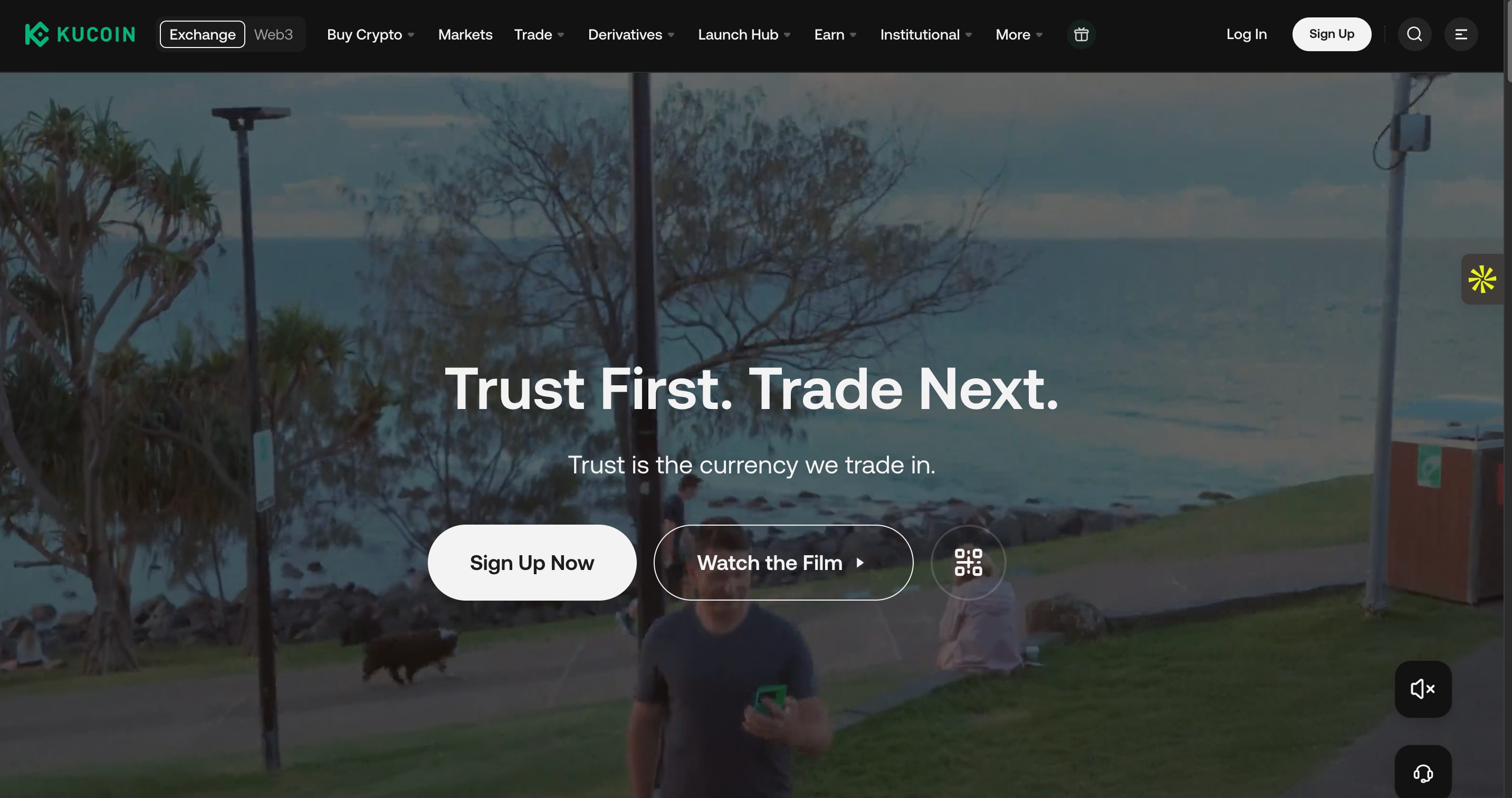
KuCoin is a large international exchange still accessible to Nigerian users. Supports crypto-to-crypto trading, a P2P marketplace, staking, and a wide range of assets. No direct Naira support, but Nigerians can use P2P for NGN transactions. Good option for traders who want access to smaller altcoins not listed on local exchanges.
Pros
- Wide asset selection (700+ coins)
- P2P marketplace with NGN
- Competitive trading fees (0.1%)
- Staking and passive income products
Cons
- No direct Naira deposits/withdrawals
- P2P scam risks
- Complex for beginners
Best for: Experienced traders seeking access to a wider range of cryptocurrencies.
How to Choose the Right Platform for Your Situation
- If you just want to convert crypto to Naira quickly, don’t overthink it, use an OTC platform like Dtunes.
- If you’re new to crypto, start with something simple like Quidax (SEC-licensed, Nigerian-built) or Luno (Longest track record).
- If you’re chasing the best rate and know how to manage risk, P2P can work, although it’s not beginner-friendly.
- And if you want to actively trade crypto pairs, use Bybit for futures and derivatives, or Quidax/Luno for spot trading with Naira access.
- If you’re a freelancer receiving crypto from international clients, Dtunes is the fastest path to Naira. Use Dtunes
- If you want the widest crypto selection, KuCoin (700+ coins) or Roqqu (100+ local selection) give access beyond the major coins available on Nigerian-focused platforms.
How to Get Started Selling Crypto in Nigeria on Dtunes
Getting started is straightforward:
- Download theDtunes app from Google Play Store or Apple App Store
- Create a free account with your email and a strong password (under 1 minute)
- Set your transaction PIN and add your Nigerian bank account details
- From the home screen, tap “Trade Crypto” and select your cryptocurrency
- Enter the amount you want to sell, your Naira payout is shown transparently before you confirm
- Copy the generated wallet address and send crypto from your wallet
- Wait for blockchain confirmation (BTC: ~20–40 min; USDT/ETH: faster depending on network)
- Naira is automatically credited, no manual step needed
- Withdraw to your bank account instantly at any time
N/B: Always double-check the deposit address before sending. Crypto transactions cannot be reversed. Verify the first and last 4 characters.
Safety Guide; Avoiding Crypto Scams in Nigeria
Crypto scams are still very real in Nigeria, especially on P2P and local platforms. Here are the basics you shouldn’t ignore:
1. Use OTC platforms for large amounts
2. Never share your seed phrase or private keys
3. Download only from official stores
4. Verify wallet addresses character by character
5. Don’t mix crypto cashouts with your salary account
6. Be suspicious of above-market rates
7. Enable 2FA on every platform
8. Keep records of every transaction
Cryptocurrency Regulations in Nigeria; What You Need to Know
Things have changed a lot in recent years.
- ISA 2025 (Investment and Securities Act): Under the Investment and Securities Act (ISA) 2025, crypto is now officially recognised, and the SEC has more control over the space. Some platforms (like Quidax and Busha) are already licensed.
- SEC Nigeria licensing: The SEC has been actively licensing crypto exchanges since 2024.
- CBN banking restrictions: Commercial banks are still largely restricted from processing crypto transactions.
- Binance legal dispute: The Nigerian government’s case against Binance is ongoing.
- Tax obligations: The FIRS has signalled intent to tax crypto gains in Nigeria. Keep records of all transactions (endeavor to talk to your tax professional for specific guidance).
FAQs On Cryptocurrency Exchanges in Nigeria
Which crypto exchange works in Nigeria in 2026?
Several platforms work, including Dtunes, Quidax, Luno, Bybit, and others. The best one depends on what you want to do. Binance remains accessible via the mobile app, though its website is blocked and NGN services are suspended. The best choice depends on whether you want to sell, trade, or hold crypto.
Is crypto legal in Nigeria?
Yes. Crypto is recognised under ISA 2025. However, CBN restrictions mean commercial banks are still largely prevented from directly facilitating crypto transactions, which is why P2P and OTC platforms are the main methods for converting crypto to Naira.
How do I convert crypto to Naira?
Use an OTC platform (Dtunes particularly) for the fastest method. Send your crypto to your Dtunes wallet address, and Naira is automatically credited to your bank account within 5–10 minutes. Alternatively, use a P2P platform like Binance P2P or Bybit P2P to sell directly to a Naira buyer.
Which platform is safest?
OTC platforms remove P2P risk. Licensed exchanges add regulatory protection.
Can I sell USDT in Nigeria?
Yes, USDT is widely supported across OTC, P2P, and exchanges. Dtunes supports USDT on TRC20, ERC20, and BEP20 networks with automatic Naira payout. Binance P2P and Bybit P2P also have active USDT/NGN pairs.
Is crypto trading legal in Nigeria?
Yes. Crypto trading is legal in Nigeria under ISA 2025, with the SEC providing regulatory oversight. However, CBN restrictions mean commercial banks are still largely prevented from directly facilitating crypto transactions, which is why P2P and OTC platforms are the main methods for converting crypto to Naira.
What happened to Binance in Nigeria?
In early 2024, Nigerian telecom providers blocked access to Binance’s website following regulatory pressure. Binance suspended all Naira (NGN) P2P, deposits, and withdrawals. The mobile app still works and crypto-to-crypto trading is still available. A legal dispute between Binance and the Nigerian government is ongoing as of 2026.
Which crypto exchange has the best Naira rate in Nigeria?
OTC platforms like Dtunes show your Naira rate transparently before you trade, at or near live market rates with no hidden spread. P2P platforms (Binance P2P, Bybit P2P) allow you to negotiate rates but carry buyer-fraud risk. Rate differences between major platforms are typically 0.5–2%, so speed, safety, and reliability often matter more than chasing an extra 1%.
Conclusion
There’s no single “best” crypto exchange for everyone in Nigeria, it depends on what you need.
If you want to convert crypto to Naira quickly, safely, and without the stress of P2P — Dtunes is built for that. If you want to actively trade, Quidax and Luno give you regulation and reliability. If you want maximum liquidity and are comfortable with P2P risks, Binance P2P via the app remains the deepest market.
What matters most in 2026 is using platforms that are transparent about fees, have a clear security track record, and aren’t going to disappear with your funds. Stick to the platforms on this list and always enable 2FA, verify addresses, and keep transaction records.
Ready to convert your crypto to Naira without the P2P stress? Try Dtunes, it is free to download. Get your Naira in your bank within minutes.
Get Started
Emmanuel is in the business of turning keyword research into contents that ranks and converts. He has been doing this for 5 years, focusing on clear structure, search intent, and on-page optimization. You can catch his attention with any crypto, tech, or political related discussion.