

Fiverr Crypto Payment to Naira in Nigeria: The Honest 2026 Guide
You can’t deal with the high fees charged by Fiverr for withdrawals anymore and you’re beginning to find an alternative. ‘Can’t we have a Fiverr crypto payment to Naira’, you’ve asked your friends who are also freelancers.
In fact, you go further to ask your search engines “how to withdraw Fiverr in Nigeria” or “Fiverr crypto withdrawal Nigeria”. Worry no more! Keep your minds at rest because you’re just at the best spot.
Does Fiverr support crypto payments?
Fiverr does not currently support cryptocurrency withdrawals. Not even USDT or Bitcoin. However, we’ll show you the closest thing to ‘Fiverr crypto payment to Naira Nigeria’.
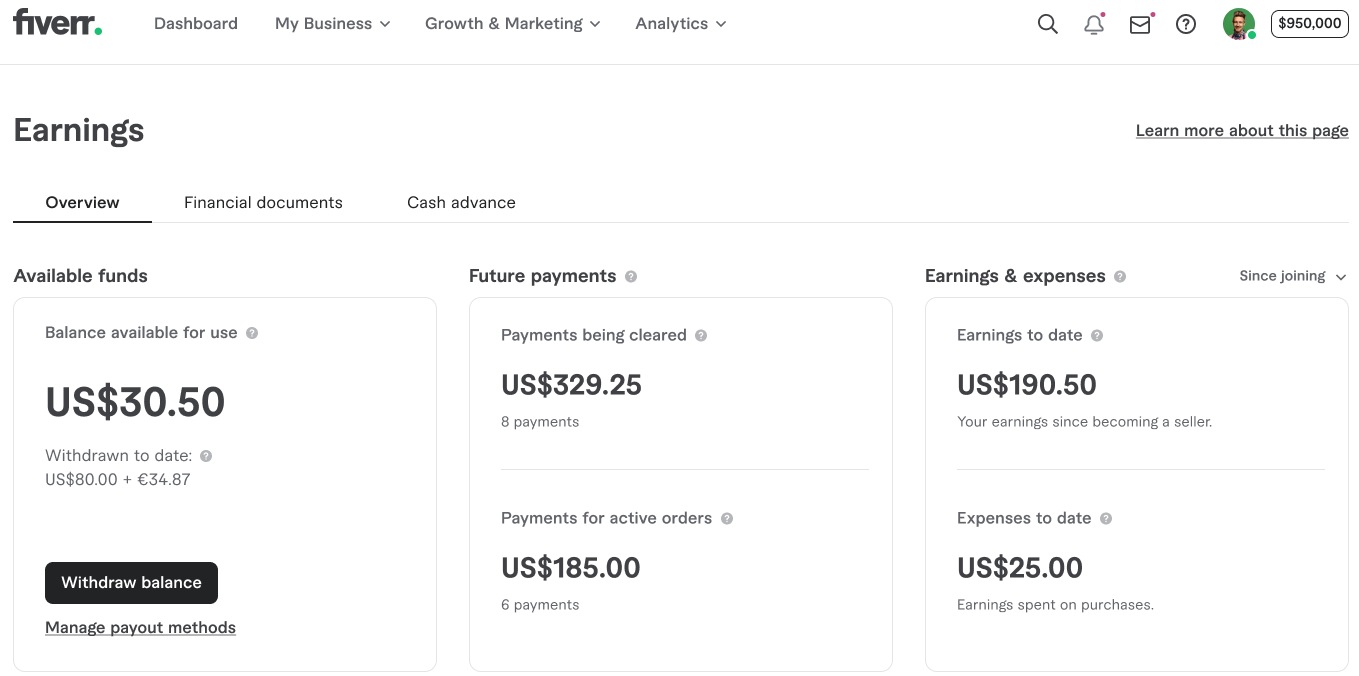
As of 2026, the official Fiverr withdrawal methods are PayPal, Payoneer, and bank transfer and since you’re frustrated with the high fees those methods charge, your next plan is to get a client from Fiverr who wishes to continue collaborating with you directly outside the platform, and establish reliable and trustworthy relationships with them. Once you’re outside the platform with this client, suggest crypto USDT as a mode of payment and you’re good to go.
After receiving the crypto, platforms such as Dtunes instantly helps you to convert your USDT to naira. The difference in price when Dtunes comes to play is just so substantial. The difference is easily noticeable.
On a $500 project, the traditional Fiverr → Payoneer → Nigerian-bank route can leave you with roughly ₦525,888 after fees and FX losses. The direct USDT payment→ Dtunes route can leave you with about ₦683,538. That is a difference of roughly ₦162,612 on a single project.
This guide explains what is obtainable, what is risky, and what the safest workflow looks like. Let’s proceed further.
Why Fiverr Doesn’t Support Crypto Payments
Fiverr’s body language suggests that they might consider the use of USDT (or crypto) as one of their methods of payment. However, due to the three major reasons below, Fiverr has avoided cryptocurrency payments:
1. Compliance: The first is compliance. Fiverr operates across more than 160 countries. Implementing cryptocurrency would mean the platform would have to deal with dozens of different regulatory systems, AML requirements, licensing regulations, and tax-reporting requirements all at the same time, these alone might be too complex to handle.
2. Dispute resolution: Dispute resolution is the second reason why Fiverr hesitates the implementation of the crypto route for payment. The payment system for Fiverr is based on the concept of escrow. If a buyer pays for a project, the money may be retained by Fiverr whilst the project is being delivered and reviewed. That is not the same with crypto transactions. It doesn’t work like that. For crypto, once the USDT or BTC has been sent, it is almost impossible for it to be withdrawn for any reason due to the buyer’s complaint later.
3. Tax reporting: Fiverr already adheres to several international tax systems. Addition of cryptocurrency would only create another layer of reporting and accounting complexities that the company has clearly determined is not worth the operational risk.
In reality, Fiverr does not look like it’ll implement support for crypto natively anytime soon. This means Nigerian freelancers must understand the best workflow that exists today instead of waiting for a feature that Fiverr may not introduce.
The Three Real Scenarios Behind This Search
Scenario 1 — A Fiverr Client Wants to Work With You Directly
This is the most common situation. When you complete several Fiverr projects successfully for the same client, he becomes happy with your service and develops trust in you naturally. Eventually the client would suggest that you continue the relationship outside Fiverr to avoid Fiverr’s fees and delays. At that point, the client may ask if he can pay you directly in USDT. This is where the Fiverr-to-crypto transition begins for many Nigerian freelancers.
Download the Fiverr-to-Direct-Client Transition Toolkit. An Editable invoice for direct USDT payments

Download Template
NB: The conversation should come from the client, not from you. Fiverr’s Terms of Service prohibit sellers from soliciting clients away from the platform. Violating that term may cause a ban on your account.
Scenario 2 — A Client Sends a Tip in Crypto
There are certain clients who would like to pay bonuses or appreciation to those who have helped them on Fiverr, but outside Fiverr’s regular mode of payments. They don’t request another Fiverr order. Instead, they just request your USDT wallet address and send crypto straight to you
This is more common among clients who are already familiar with the crypto rails as the USDT transfer is cheaper and faster than bank wires.
Scenario 3 — You Want Future Clients to Pay You in Crypto
Many freelancers will discover that Fiverr’s economics is getting to be pocket-tearing. As a platform that charges a fee as high as 20% of one’s cash-out, where losses are also incurred through Payoneer FX, the resulting take-home pay is usually affected significantly. This has made freelancers start looking for direct-client jobs, which will have USDT payment.
Download the USDT Payment Terms Agreement Template. Send this to your client BEFORE you start any work

Download Template
The Risks — Read This Before You Take Crypto from a Fiverr Client
Fiverr ToS Risk
The Fiverr’s terms of service is the largest of them. Your account can definitely be restricted or banned if you ask clients to leave Fiverr. It is against the platform’s terms of service. Fiverr takes solicitation quite seriously. Here is a safe thing to do:
- Fulfill the original Fiverr job on Fiverr and then
- Allow the client to recommend that you work directly (outside the platform)
If you have to start working off the platform, do so after the original project is completed. That sequence matters a lot. Don’t request a crypto payment for an active Fiverr order that is still inside Fiverr’s ecosystem.
Buyer Dispute Risk
The Fiverr’s escrow system is meant to protect both sides, but direct crypto payments do not. The absence of the escrow system makes the parties involved to be vulnerable in a way. Once USDT is sent, the transaction is final.
If a client pays you in USDT and then claims the work was unsatisfactory, there’s no escrow to fall back on and this might lead to disagreements or work complications between you both. This means you must screen your clients adequately and ensure proper documentation and agreement when working directly outside Fiverr.
For ongoing clients, the safest structure is to receive 50% upfront in USDT and 50% after delivery. That removes most of the risk of unpaid work.
Tax Risk
The tax law in Nigeria considers freelance income earned from any source, including Fiverr, Payoneer, bank transfers, or USDT, as taxable income. Earnings from crypto should be accounted for, they are not invisible income. Other records that should be kept include invoices, wallet transfers, bank settlements, and project agreements.
Professional freelancers should consider earnings from activities such as crypto trading and mining as any other form of business revenue. Under the Nigeria Tax Act 2025, your foreign income is taxable above ₦800,000 annually. Crypto income falls under this, so you should endeavour to get your tax identification number.
6 step direct-USDT workflow – How to Take Crypto Payment from a Former Fiverr Client
Getting crypto payment from your client may not be as simple as you think, especially if you are doing this for the first time. To safely take crypto from a familiar client, go through the steps below carefully.
Step 1 — Complete the Fiverr Order Normally
This is the first thing to note. Ensure that you complete the original order through Fiverr first. Do an amazing job and deliver at the expected time. In fact, delivering before time creates a great impression around you. Get a review from your client, then close the project professionally. Fiverr remains valuable for trust-building, reviews, and client acquisition.
Step 2 — Let the Client Initiate Off-Platform Work
After closing the project, if the client wants to continue outside Fiverr, don’t be the one to initiate such a move, let that suggestion come from them. Do not pressure or hint aggressively. This is both safer and more professional.
Step 3 — Agree on Terms Clearly
Before any crypto payment happens, define:
- project scope
- timeline
- payment amount
- revision policy
- wallet network
Discussing all of these at length and having a mutual understanding before-hand will save you from unnecessary misunderstanding in the long run. TRC20 USDT is usually the default because fees stay around $1.
Step 4 — Share Your Dtunes Wallet Address
The next step here is to open the Dtunes official website app and generate your wallet address (of course, you must have an account with Dtunes already to do this). Choose:
- USDT
- TRC20 network
Copy the address carefully and send it to the client. One wrong character can send funds permanently to the wrong wallet. In short, this is the route you follow to get your wallet address on Dtunes:
Open Dtunes app → Receive USDT → Choose TRC20 network → Copy address and send it to your client. (TRC20 fees are around $1)
Step 5 — Confirm that the direct USDT Payment arrives in your Dtunes
The confirmation of TRC20 transfers usually takes between 2–5 minutes. Do not deliver your service until the transaction is fully confirmed in your wallet. This is one of the advantages crypto has over other payment methods where fake bank alerts and delayed international transfers are common. Protect yourself from fake payment alerts.
Step 6 — Sell USDT for Naira On Dtunes
On the Dtunes app:
- tap “Sell USDT”
- confirm the displayed rate
- enter your Nigerian bank account
Naira typically arrives within 5–10 minutes. That entire process is dramatically faster than the Fiverr → Payoneer route.
The Math — $500 Project via Fiverr vs Direct USDT to Dtunes
This is where other guides fail to address. Here, the difference becomes very visible and impossible to ignore. For the purpose of comparison, we’ll make the assumptions below:
- Project value: $500
- User location: Lagos
- Bank: GTBank
- USD benchmark: ₦1,377
- Dtunes USDT sell rate after OTC spread: ₦1,363
At perfect mid-market conditions, $500 equals about ₦688,500. That becomes our benchmark.
Route A — Fiverr + Payoneer Route
| Step | Cost |
| Fiverr seller fee (20%) | $100 deducted |
| Remaining balance | $400 |
| Fiverr clearance period | 14 days |
| Fiverr → Payoneer fee | $1 |
| Payoneer withdrawal fee | $3 |
| Payoneer FX markup | 3.5% |
| Effective post-fee amount | $396 |
| Effective conversion rate (after 3.5% fx) | ₦1,328/USD |
| Final payout | ₦525,888 |
| Time to Receive Funds | Approximately: 17–21 days |
Final Value Retained is about 76.38% of ideal mid-market value
Route B — Direct USDT → Dtunes
| Step | Cost |
| Client sends 500 USDT | $1 TRC20 fee |
| USDT received | 499 USDT |
| Fiverr fee 20% fee | $0 |
| No 14-day clearance | None |
| Sell 499 USDT on Dtunes at 1% OTC spread | Rate: ₦1,363 per USDT × 499 = ₦680,137 |
| Dtunes cashback (+0.5%) | +₦3,401 |
| Final payout | ₦683,538 |
| Time to Receive Funds | Usually Under 30 minutes |
The Final Value Retained isApproximately 99.3% of ideal value
The Verdict — Side by Side
| Route | Final ₦ | Time | Loss vs Crypto |
| Direct USDT → Dtunes | ₦683,538 | 30 mins | — |
| Fiverr → Payoneer | ₦525,888 | 17–21 days | −₦162,612 |
Can you see why OTC will always be safer than P2P for your crypto sales.
NB: The rates used are typically the prevailing market rates as at the time of writing this article. For better insights on the peculiarity of each platform, endeavour to check the respective website for each platform.
Fiverr Payoneer vs crypto Nigeria
There has been a shift from the “payment preference” discussion towards crypto vs Fiverr’s Payoneer route for many freelancers in Nigeria. There has been a serious discussion on fees, speed, exchange rates, cash flow, and the real money you get at your bank account after a project. The traditional Fiverr-Payoneer-Nigerian bank transfer method results in freelancers losing money in a series of places, including:
- Fiverr’s 20% seller fee
- Payoneer withdrawal charges
- FX conversion markups
- long withdrawal timelines
When the money finally gets into naira, the amount would be smaller than what the client paid. That huge difference above is an eye-opener, it changes how freelancers think about money. For many Nigerian creatives, ₦162,612 is:
- Monthly rent
- A laptop repair or upgrade
- Data or internet subscriptions
- Adobe, Canva, CapCut, or editing software subscriptions
- Transportation cost or daily work expenses for weeks
Many freelancers are now getting USDT directly from trusted clients and are able to convert it to naira in no time, without having to wait for weeks for clearance and bank processing. The off-platform Fiverr client payment provides higher amount in the Nigerian bank account and is faster than the methods of payment on the platform
Common Questions Addressed
What if My Client Wants to Pay Through Fiverr in Crypto?
They won’t be able to do that as the facility is not yet available on Fiverr. Fiverr buyers are only allowed to pay through Fiverr’s payment methods, which are the channels that Fiverr officially supports. Crypto is not one of them. All cryptocurrency transactions need to be conducted outside of Fiverr’s payment system.
What if the Client Wants to Pay in Bitcoin Instead?
That works too. Bitcoin is one of the cryptocurrencies supported by Dtunes. The workflow has great semblance: share your Dtunes BTC wallet address with the client, wait for the transaction to confirm (Bitcoin confirmations take 10–60 minutes), then sell on Dtunes.
NB: On BTC’s price volatility, for small projects, request USDT instead so the amount you receive doesn’t fluctuate before you can sell.
Are there freelance platforms that support crypto natively as an alternative to Fiverr?
Yes, but they are very small when compared to Fiverr. Platforms like CryptoTask, Cryptogrind, and Bitwage exist but have a fraction of Fiverr’s traffic. For most Nigerian freelancers, staying on Fiverr for client discovery and using direct USDT payment for returning clients is more practical than switching platforms entirely.
When This Strategy Doesn’t Work
We all agree that direct crypto payment is powerful. However, it may not always be the right move for every freelancer, every client, or every project. Sometimes Fiverr’s built-in protections and visibility are actually more valuable than the money you save.
Here are the situations where staying fully on Fiverr makes more sense
You’re Working with a New Client
If this is your first time working with a client, it is not advisable that you work with him outside Fiverr. Fiverr’s escrow system is usually worth the fees, because on Fiverr:
- the client funds the order before work starts
- Fiverr holds the payment securely
- there is a documented agreement for the project
- disputes can be reviewed by Fiverr support
With direct crypto payment, none of those protections exist. If a stranger promises to pay “after delivery” through USDT and disappears, there is no Fiverr support ticket to open and no escrow protection to fall back on.
The Project Is Very Small
For a $40, $50, or $60 project, spending time optimizing payment routes usually does not affect you materially. At that level:
- speed matters more than squeezing out every percentage point
- the client may not understand crypto
- setting up wallets and explaining networks can create unnecessary friction
Sometimes the smartest decision is simply:
- complete the Fiverr order
- withdraw normally
- move on to the next client quickly
Direct crypto becomes far more meaningful on larger projects where Fiverr’s 20% fee starts becoming painful.
You’re Still Building Your Fiverr Reputation
For newer Fiverr sellers, Fiverr itself is still doing a huge amount of heavy lifting. The platform gives you:
- visibility in search results
- reviews and ratings
- buyer trust
- algorithm exposure
- repeat-client opportunities
At the beginning, those advantages are often more valuable than fee optimization. A Level 0 or Level 1 seller with only a few reviews should focus primarily on delivering excellent work, getting 5-star reviews, increasing response rate, improving rankings, building long-term client relationships
Frequently Asked Questions
Does Fiverr support cryptocurrency payments?
There are no direct crypto withdrawals on Fiverr. The purchaser pays using the Fiverr payment system, and the seller can withdraw using the PayPal, Payoneer or bank transfer services only. The only means to get crypto from a customer on Fiverr is out of the platform, after the original Fiverr order is completed. To adhere to the ToS, going off platform must be a client decision.
Can I receive USDT from a Fiverr client?
Yes, you can, but only after the initial Fiverr order is fulfilled. The safest thing to do is to allow the client to initiate the off-platform continuity.
How do I convert Fiverr USDT to naira in Nigeria?
Install the Dtunes app, add USDT to your Dtunes wallet (cheapest rate is TRC20 at $1), click ‘Sell USDT’, confirm the rate and your naira will instantly be deposited into your Nigerian bank account within 5 – 10 minutes. Dtunes offers 0.5% cashback on all trades, and allows trading without a KYC below N500,000 volume. See the full USDT to naira fee breakdown
Is receiving crypto from foreign clients legal in Nigeria
Yes. Nigeria’s Investment and Securities Act regulation acknowledges cryptocurrency, this makes it legal. However, freelance earnings are still subject to taxes in Nigeria.
Which USDT network is cheapest for freelancers?
For most freelancers in Nigeria, TRC20 is the most convenient option as its transaction costs are still low (usually $1 USD per transaction).
The Bottom Line
Fiverr’s addition of cryptocurrency payments is not likely to happen anytime soon. Today (2026), Fiverr has 3 official withdrawal options, namely PayPal, Payoneer, and bank transfer.
If you’re merely expecting a native “withdraw as USDT” button in Fiverr, you may find yourself disappointed. However, this does not mean that Nigerian freelancers will be stuck forever with costly payment options. Many Nigerian freelancers are now leveraging on the bright side of Fiverr, including:
- The opportunity to find international clients on Fiverr
- Building a good portfolio
- collecting reviews
- creating long-term trust
- ability to show one’s reliability to buyers
After a relationship is established and both parties are confident in one another, some clients eventually choose to continue interacting outside the platform. That’s where USDT comes in handy. Do not send all payments through: Fiverr → 20% seller fee → Payoneer → Nigerian bank → FX markup.
The difference is phenomenally large in terms of money.

Emmanuel is in the business of turning keyword research into contents that ranks and converts. He has been doing this for 5 years, focusing on clear structure, search intent, and on-page optimization. You can catch his attention with any crypto, tech, or political related discussion.